
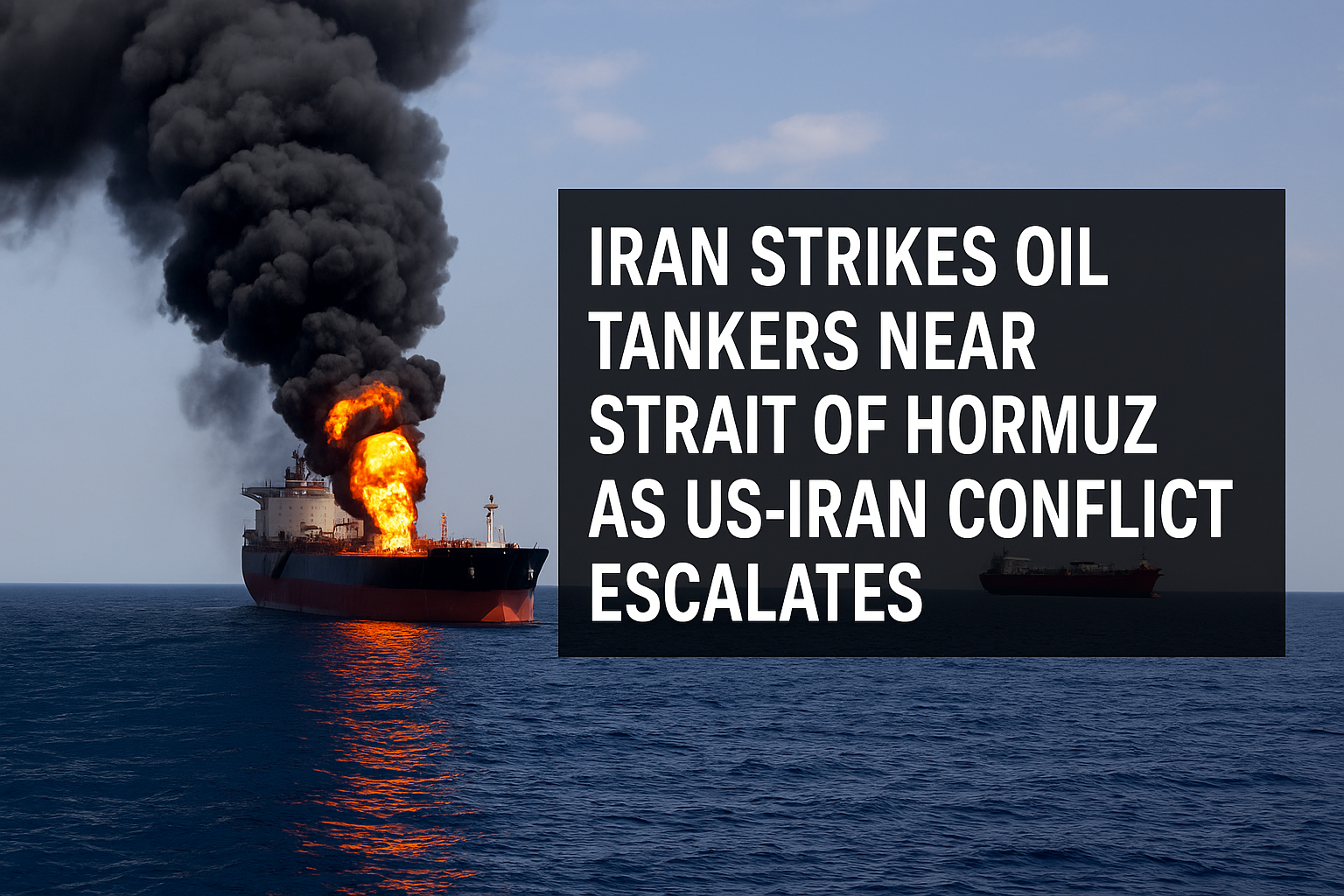
March 12, 2026 — Strait of Hormuz Iran launched attacks on multiple oil tankers near the Strait of Hormuz, igniting fires on at least two vessels in Iraqi waters and killing one seafarer, amid intensifying conflict with the United States and Israel.
The strikes occurred overnight into Thursday, transforming the vital shipping chokepoint into a battlefield, according to reports. Two oil tankers caught fire following assaults by Iranian vessels, with port authorities confirming at least one crew member’s death. Three tankers were damaged in total across the Gulf region, including one affected by debris in the UAE’s Jebel Ali port.
US Military Response
In retaliation, the US military targeted Iranian aircraft and air capabilities. US intelligence has identified direct Iranian attacks as the primary threat to tankers transiting the strait, per a Guardian report. Iran also struck Gulf nations and warned ships against passing through the key oil route.
Surging Oil Prices and Economic Impact
Oil prices surged following the incidents, with Energy Secretary Chris Wright addressing the Iran war and rising costs in a CNN interview. The attacks exacerbate disruptions in the region, where Iran has hit energy supplies and foreign tankers.
Broader Context
The escalation builds on recent events, including March 11 attacks that injured mariners in the Strait of Hormuz. Morning news bulletins highlighted the chaos, with NBC News covering Iran’s tanker strikes alongside US responses. Euronews provided a latest bulletin on global implications.
Separate reports emerged of evidence pointing to a US role in a deadly school attack in Iran, adding to bilateral tensions. Authorities continue monitoring the situation as merchant shipping faces heightened risks.